
 020 8879 6333
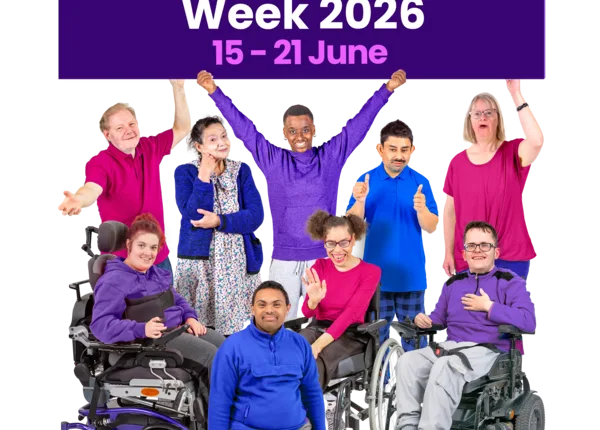
Generate is celebrating both Learning Disability Week and Autistic Pride. We wanted to share with you the experience of members and staff with learning disabilities and/or autistic.
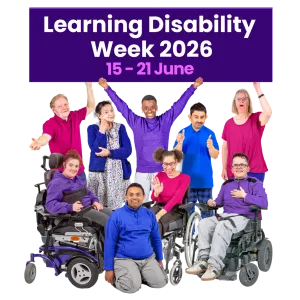
“Do you see me?” Learning Disability Week 2026
Learning Disability Week takes place on the third week of June every year and celebrates what people with learning disabilities bring to society. This year’s theme is “Do you see me?”; we asked our members and staffs what makes them feel seen, heard, and valued.

What is a Learning Disability?
A learning disability affects how people learn new things and understand information. According to the Department of Health and Social Care, it is “a significantly reduced ability to understand new or complex information, to learn new skills (impaired intelligence), with a reduced ability to cope independently (impaired social functioning), which started before adulthood”.
How does that impact a person’s life?
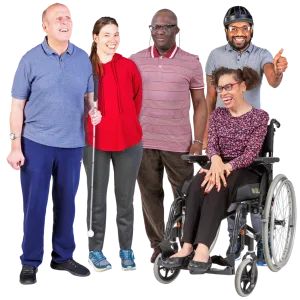
What makes our members feel seen?
Our members believe that having roles, responsibilities and being a part of something make them feel seen.
“A good organisation involves people who help each other out and look out for each other. It is one that organises day trips out and give opportunities to do new things.” (Luis)
“A good organisation needs to treat people with respect…some of them they don’t…A good organisation should be considerate to people’s needs. Everyone should do their fair share and be willing to work hard – both members and staff.” (Shaun)
Members report they feel respected and valued and are happy with the support they get.
It is important as an organisation to listen to the people you support, as sometimes, they would like a bit more.
“I want to see more dating/speed dating and opportunities to meet a partner. I would like more opportunity to attend community events – theatre, sports games, etc… I want to see the government do more for disabled people. They should be funding more clubs and activities.” (Shaun)
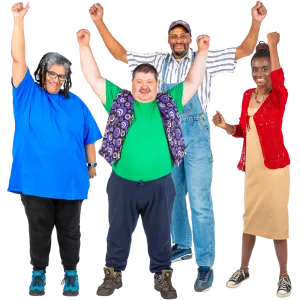
What could you do to celebrate Learning Disability Week?
Spread the word!
- On social media by using the hashtags #LDWeek2026 and #DoYouSeeMe .
- Share your own experiences and listen to other people’s experiences, watch people share their experiences on video or make your own!
- Host an event or workshop, be creative!
- Respect others’ experiences, views and opinions.
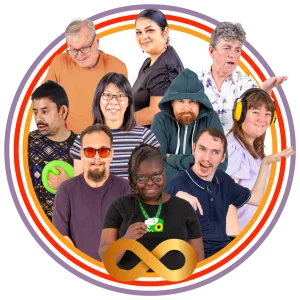
“Strength in Community” Autistic Pride 2026
The same week, on 18th June we celebrate Autistic Pride Day. It is not an awareness campaign, but a stand led by Autistic people for identity, self-determination, and the right to define their own narrative.

Autistic people or people with autism?
If you are not sure, it is OK to ask the person.
The phrase “person with autism” uses person-first language. It emphasises the individual before the condition. “Autistic person” on the other hand, uses identity-first language. The person considers autism as a core part of their identity.
This is a personal choice. Being mindful of people’s language preferences when talking about autism is respectful and inclusive.
What is Autism?
Autism (autism spectrum disorder, or ASD) is a developmental condition which affects how the brain processes information. Autistic people take in information and learn new skills differently to neurotypical people. Autism is not a learning disability; only 1/3 of Autistic people have a learning disability as well.
Autism is a spectrum, which means no two Autistic person is the same. As the saying goes “If you know one Autistic person, you know one Autistic person” (and that’s it)!
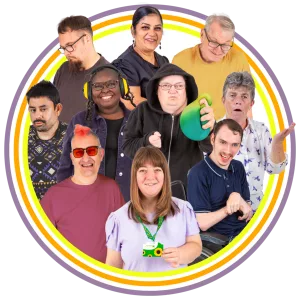
History of Autism
In 1943, Leo Kanner first described early infantile Autism as ‘abnormal behaviour in children.’
One year later, Hans Asperger published information on children with similar traits to Kanner’s syndrome with above average skills. The term Asperger’s Syndrome was introduced in the 1980s. It is no longer an official diagnosis in the UK (2013) and is now classified under autism spectrum disorder. The term is now considered controversial due to Hans Asperger’s collaboration with the Nazi Party.
While knowledge of Autism has improved and more people are getting diagnosed, there’s still more work to be done to improve support and create a world where Autistic people thrive.
To compensate for this, Autistic people are building strong peer-led support networks.
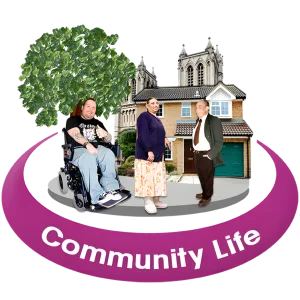
Strength in Community
Many Autistic people give back to the Autistic community by creating opportunities for other Autistic people. Opportunities include peer-led community cafes, activity sessions, walking groups, or employment support forums.
Many charities are Autistic led including A2nd Voice and the London Autism Group Charity.

Final thoughts
Learning Disability Week and Autistic Pride 2026 are a reminder that celebration and advocacy go hand in hand, and visibility, celebration, and community are essential.
The voices of autistic people and people with learning disabilities — their hopes, their humour, and their wisdom — should guide service delivery, so we deliver tailored support where everybody thrives.
As we mark these important weeks, we encourage everyone to listen, learn, and act: whether that’s sharing a hashtag, attending an event, or simply making space for someone to be heard.
Whether you are autistic, have a learning disability, support someone who does, or are simply an ally, there is a role for everyone in building a world where people are truly seen, heard, and valued.
Generate is proud to stand alongside our members and celebrate the incredible strength, diversity, and contribution of our community. Together, we can make sure that ‘Do you see (or hear) me?’ is always answered with a resounding “yes!”.

 020 8879 6333